In this guide
- The Cycle to Work scheme lets your employer buy you a bike, which you repay from gross (pre-tax) salary
- 2026 limits: €1,250 bike and safety gear, €1,500 e-bike, €3,000 cargo bike
- You pay income tax, USC and PRSI only on the balance of your salary
- A €1,250 bike saves about €340 at €35,000 and €590 at €50,000
- You can use the scheme once every four years
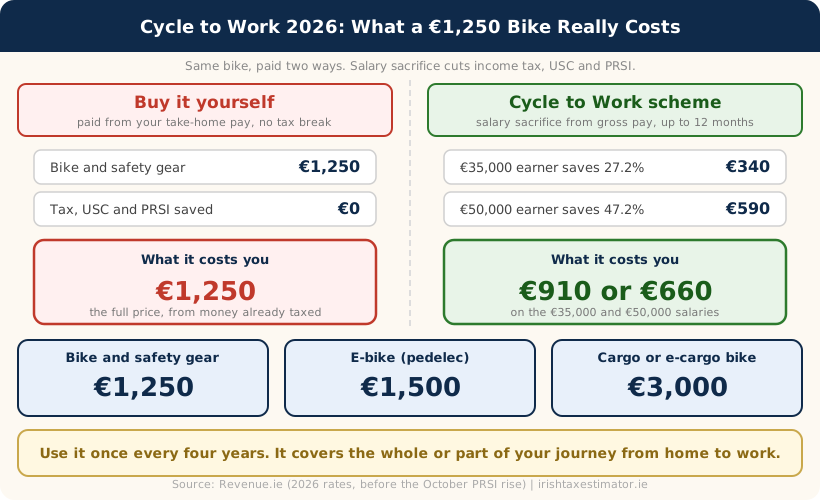
A new bike can cost well over €1,000, and most people pay for it out of money that's already been taxed. There's a better way. The Cycle to Work scheme (many people still call it the Bike to Work scheme) lets you pay for a bike out of your pay before tax, which can cut the real cost by a quarter to a half.
This guide explains the 2026 limits, how the salary sacrifice works, and how much you'd actually save at different salaries. We use worked examples with real numbers.
What Is the Cycle to Work Scheme?
The Cycle to Work scheme is a tax break that lets your employer buy you a bicycle and safety equipment without you being taxed on the benefit. According to Revenue, you're exempt from tax on the benefit of the bicycle cost, up to the relevant limits, where your employer buys the bicycle and doesn't require you to pay for it.
In practice, most employees don't get the bike for free. Instead, you repay your employer through a salary sacrifice, which is where the tax saving comes from.
How Much Can I Spend on a Bike in 2026?
You can spend up to €1,250 on a regular bike and safety equipment, €1,500 on an electric bike, and €3,000 on a cargo bike. These are the limits published by Revenue for the scheme.
| Type | Tax-free limit |
|---|---|
| Regular bike and safety equipment | €1,250 |
| Electric bike (pedelec) | €1,500 |
| Cargo or e-cargo bike | €3,000 |
If the cost goes above the limit, Revenue says income tax, USC and PRSI apply to the excess. So a €1,400 regular bike would be exempt up to €1,250, and the extra €150 would be taxed.
How Does the Salary Sacrifice Work?
Under a salary sacrifice, your employer buys the bike and you repay it through a reduction in your gross salary for up to 12 months. Revenue states that your employer can arrange a salary sacrifice "over an agreed time, lasting not more than 12 months".
The key line for your wallet is this: you'll only pay income tax, USC (Universal Social Charge) and PRSI (Pay Related Social Insurance) on the balance of your salary. Because the repayment comes out before those three deductions, you save on all three.
Worked Example: How Much Will I Save?
Here's what a €1,250 bike costs two people in 2026, both single and paid through PAYE (Pay As You Earn). Your saving is the bike price times your combined marginal rate, which is the rate on your last euro of pay.
| Sarah (€35,000) | Liam (€50,000) | |
|---|---|---|
| Income tax rate on the sacrificed pay | 20% | 40% |
| USC rate | 3% | 3% |
| PRSI rate | 4.2% | 4.2% |
| Combined rate | 27.2% | 47.2% |
| Saving on €1,250 | €340.00 | €590.00 |
| Real cost of the bike | €910.00 | €660.00 |
| Repayment per month (€1,250 ÷ 12) gross | €104.17 | €104.17 |
| Fall in monthly take-home pay | €75.83 | €55.00 |
Liam is above the €44,000 standard-rate band for a single person, so his sacrificed pay would have been taxed at 40%. That's why he saves more. Sarah sits in the 20% band.
An e-bike at the €1,500 limit would save Liam €708.00 (€1,500 × 47.2%), so it would cost him €792.00. To see your own numbers, try our PAYE tax calculator with and without the sacrifice.
Two notes on these figures. They use the 4.2% PRSI rate that applies until 30 September 2026. From 1 October 2026 it rises to 4.35%, so a sacrifice that runs past that date saves slightly more (see our PRSI rate increase guide). Also, the USC rate depends on your income, so lower earners will see a slightly different saving.
How Often Can I Use the Scheme?
You can use the Cycle to Work scheme once every four years. Revenue says the tax year in which the bicycle is provided counts as the first year. So if you used the scheme in any month of 2022, you can use it again from 1 January 2026.
The bike must be used for qualifying journeys. Revenue defines this as "the whole, or part, of a journey between your home and your normal place of work". A commute where you cycle to the train station counts, since it covers part of the journey.
What Happens If I Spend More Than the Limit?
If your bike costs more than the limit, income tax, USC and PRSI apply to the excess. Say you buy a €1,600 regular bike. The first €1,250 is covered by the scheme, and you'd be taxed on the extra €350 as a benefit.
Many people choose a bike at or just under the limit to keep the full saving. If you want a pricier model, you can still use the scheme, but the amount above the cap gets no relief.
How to Apply for the Scheme
The steps are simple, but your employer runs the process, so start by asking them.
- Ask HR or payroll whether your employer offers the scheme and which suppliers or shops it uses.
- Choose your bike and safety gear, keeping the total within the right limit.
- Agree the salary sacrifice, which can last up to 12 months.
- Your employer buys the bike and takes the agreed amount from your gross pay each month.
Check your payslips to confirm the sacrifice is coming off before tax. If you think too much tax was deducted, our Tax Refund Calculator can help you check what Revenue owes you.
Conclusion
The Cycle to Work scheme is one of the easiest ways to cut the cost of a bike. You buy it from pre-tax pay, so a €1,250 bike costs about €910 at €35,000 and about €660 at €50,000.
Remember the limits (€1,250, €1,500 or €3,000), the four-year rule, and that the bike must cover part or all of your commute. Ask your employer whether they offer it, and use our PAYE tax calculator to see how the sacrifice changes your monthly pay. For other ways to keep more of your salary, see our tax credits guide.
Frequently Asked Questions
How much can I spend on the Cycle to Work scheme in Ireland? The limit is €1,250 for a regular bike and safety equipment, €1,500 for an electric bike and €3,000 for a cargo bike, per Revenue. Income tax, USC and PRSI apply to any excess.
How often can I use the Cycle to Work scheme? Once every four years. The tax year the bicycle is provided counts as year one, so if you used the scheme in 2022 you can use it again from 1 January 2026.
How does the salary sacrifice work? Your employer buys the bike and you repay through a reduction in gross salary over no more than 12 months. You then pay income tax, USC and PRSI only on the balance of your salary.
How much will I actually save on a €1,250 bike? About €340 on a €35,000 salary (cost €910) and about €590 on a €50,000 salary (cost €660), using 2026 rates. Your saving is the bike price times your combined income tax, USC and PRSI rate.
Does my employer have to offer the scheme? No. It's something your employer can choose to offer. Ask HR or payroll whether they run it and which supplier they use.
This article is for informational and estimation purposes only. It does not constitute professional tax advice. Tax rules can change. Always check Revenue.ie for the latest figures or consult a qualified tax advisor for your specific situation.
Written and reviewed by an Associate Chartered Accountant (ACA) in Ireland with expertise in Irish personal taxation, payroll deductions, and Revenue.ie guidelines.
Share this guide
Was this guide helpful?